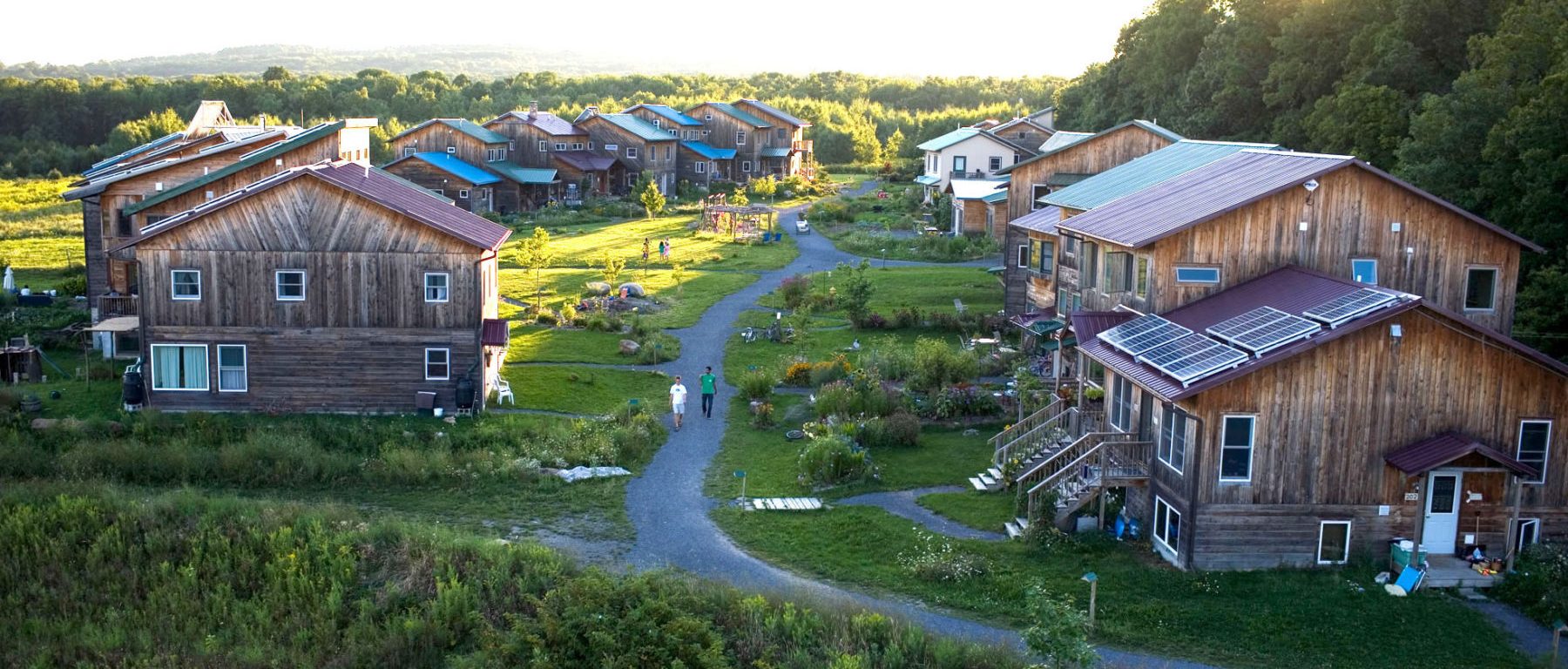
The tribal life doesn’t turn people into saints; it enables ordinary people to make a living together with a minimum of stress year after year, generation after generation.
Daniel Quinn
Lately, I’ve been mentioning BHBs a lot (Bigger Home Bases). But it’s been a long time, I think, since I laid out exactly how I envision getting these larger household formats into the public discussion. Since I am constantly rolling these things around in my brain, I mistakenly assume that non-regular readers (or even regular readers) know what the hell I’m talking about. So let’s just do a fresh recap of the BHB project, just for general background, so we’re somewhat on the same page.
First, let’s recall the baseline assumptions of this blog as a whole:
- Humanity, through its technologies and sheer numbers, is overwhelming the ability of the planet to maintain and heal itself. Every major natural support system on Earth is in decline, mostly steep and accelerating.
- As such, our immediate and ‘sacred’ task is to massively and rapidly reduce human impact on the planet, in every way possible: reducing population, shrinking the economy, curtailing consumption, limiting labor, eliminating dangerous industrial substances and products, reducing physical transport, etc. Essentially, the system as a whole must CONTRACT.
- Unfortunately, anything that smacks of LESS is an absolute non-starter in today’s economic and political environment, where growth of all kinds is universally agreed-upon, and is seen as the only way to create progress and success. MORE is king.
- Needless to say, starting a discussion on a subject (contraction) that is a non-starter seems logically impossible, and indeed, we should not expect any talk or action around massively reducing human impact to come from either our national or international leaders and organizations (i.e., from ABOVE).
- The only way to get a meta-degrowth agenda into the public consciousness is thus from BELOW. A new model of living must be demonstrated in concrete, actual examples of a different household format, a model that can drive across-the-board reduction in ecological impact while simultaneously allowing people to thrive and actually lead better lives.
- As Buckmister Fuller wrote, “You never change things by fighting the existing reality. To change something, build a new model that makes the existing model obsolete.”
So how would we do that? Well, here’s my rough idea for the BHB project:
- A nonpartisan group of private donors/sponsors would be assembled, to provide funding for the project. As much as possible, these sponsors should stay out of the spotlight, not in a secret cabal kind of way, but just to keep the attention on the communities and community members themselves.
- What is the project, exactly? It would be the creation of 15-20 communities of people, spread around the country, in various types of geographical locations: cities, suburbs, exurbs, rural areas. Each community would have 150 members, selected through an interview process. And aside from thumbing the scale a little bit to create a good diversity mix, these would all be regular people, not controversial and/or uber-beautiful people designed to generate maximum drama and confrontation. The goal here is not entertainment, but an effort to pre-figure what could be possible society-wide, were some basic policy changes to happen. So the community members would be from all walks of life: people doing well, people struggling, people in great shape, people with chronic illness or disability, skinny people, large people, black people, white people, brown people, people of different faiths or no faith, even unhoused people. A big part of the hypothesis is that our current polarized landscape, with its poisonous division and hatred, is largely artificial; and that when people of all walks of life actually live together and work towards a common goal, our prejudices and hatreds will melt away, or at least not dominate every waking hour of our lives.
- Each community member, children included would receive $1500 a month in basic income. I realize that this is a lot of money, even by UBI trial standards, but that is because we are trying to reduce participation in the formal workforce (labor is one of the things that must contract), and because full employment as a social goal is no longer realistic (which is actually a good thing).
- My back-of-the-envelope calculations put us in the ballpark of around $240-250 million for a five-year BHB project of 15 communities: $13.5 million for each community for five years, plus another $40-50 million for recruiting costs, logistical support, media expenses, and any other administration costs that might accrue. All in all, $250 million for a five-year pilot is incredibly affordable (I think that would be about 1/1000 of Jeff Bezos’s net worth).
- So this is a fully-funded, private pilot program of people receiving a substantial basic income for five years, set inside a much larger household format. Each BHB member would sign onto a simple charter agreement, committing them to some basic goals: staying the full five years (if you leave, no more money); non-abuse and non-exploitation of co-members; a general commitment to reducing ecological impact via lowering consumption, reducing outside labor and transport; a general push to bring more economic and social functions back into the community (child care, elder care, food production, small business formation, etc), in order to reduce dependence and increase self-reliance.
- Aside from the basic income and the pre-determination of the general geographic area for each community, the BHBs would only receive logistical support from the project admin staff: research on local zoning laws, connections to sustainable builders/contractors, help navigating health-care options, etc.
- In other words, the BHB members, in order to replicate how it might happen at the national level, would still have to make all the major decisions for themselves: how to self-govern internally, whether to buy or lease property, whether to build new structures or retrofit old ones, the physical format of the communities (little houses vs. dorm style, for example), how to finance projects, what to do with personal-vs-community finance, etc. The goal of the project is not to dictate the specifics from the top, but merely to set the overall goal of reducing ecological impact through a much larger household format.
Basically, these BHBs would address the question: “If provided with a substantial basic income, and committed to building larger household platforms, and given some logistical assistance with local dynamics and conditions, can people make significant and rapid changes to their lives, so that they could reduce their ecological impact while simultaneously increasing their own physical, financial, and psychological well-being?”
My bet, and the big gamble of this project, is that the answer is YES, and that BHBs could do even more, a kind of alchemical change of lifestyle that would combat virtually all of our current problems at the same time, from below. [see here for a recent post with some more granularity on the specific things BHBs could address all at once]
As the model BHBs unfold their various paths, appropriate for their specific conditions, there would be a substantial social and traditional media campaign funded from the admin portion of the project budget. As this exposure takes hold, people would start to see how things could actually work in their particular corner of America. A couple years in, as the BHBs develop and thrive (again, that’s the big gamble, but I’m predicting success), the wider public would start to say to themselves: “Wait a minute, why aren’t we doing this for everybody? If all it takes to flip the script — from poisonous polarization, economic precocity and hopelessness, and constant psychological trauma to a positive, hopeful future — is to enact a Universal Basic Income and to help people logistically re-org into larger, more stable groups, then why aren’t we doing this NOW?”
Immense popular pressure would begin to build, especially from both the elderly, who see loneliness, penny-pinching, and dismal senior housing as their only future, and the younger generations, who have largely already given up on “regular” American life, because of its ridiculous unaffordability. But I also see the middle generations, like my own Gen X, jumping at this BHB option, as we have also largely seen that the script handed to us about a “successful” life is largely bullshit, with no answers for late-emerging life crises, like the impossibility of nuclear family bliss, the razor’s edge precarity of losing a good job and being thrown into the dustbin as non-employable dinosaurs, and the sudden realization that yes, we have care for our aging parents, who probably don’t have enough money for a dignified retirement.
As the popular demand for UBI and BHBs grows, either our existing two political parties will have to incorporate these things into their platforms, or, more likely, a new political party (maybe Andrew Yang’s forward Party) will just go all-in on these two planks, plus MMT (we’ll cover MMT in the next post, or you can just do some checking on your own), making them the laser-focused core of its identity.
As a practical matter, given that I have written about the hermetically-sealed control of the plutocracy in the US, I would see any new political party (or a transformed Dem/GOP) as having to convince one part of the plutocracy that a UBI would be awesome for their interests and their bottom lines. As I see it, this would be any business that sells products for consumption, since UBI puts a lot more cash in people’s pockets for buying stuff. And banks could be brought on board, as UBI would only be dispensed to bank accounts electronically (no physical checks), so more people would be driven to opening bank accounts, with steady deposits coming in. The federal government should ban any fees associated with the UBI itself, but simply having so many more “banked” people would be attractive to banks trying to sell their various other instruments. [and yes, only about 5-6% of Americans are currently unbanked, but UBI would substantially increase the holdings in these accounts, which alone would be attractive to banks]
So, getting UBI, which is the key first step, into the federal government would essentially be pitting one part of the plutocracy against another. Retailers and banks should love it, but companies that primarily deal in personal and household debt would not be so thrilled. And yes, I realize that big banks themselves are also huge credit card issuers, but they could be convinced that more cash for regular people would actually help them to NOT default on their outstanding debt, and might even seduce them into taking on more debt in the future, because their will get drunk on the steady money coming in.
In other words, as I described it a long time ago, UBI is a kind of Transparent Trojan Horse, a mechanism that the plutocrats welcome into the fortress, seeing full-well what it is, but rubber-stamping it anyway. Why would they do that? Because the plutocrats will not believe that the BHB part of the equation will ever emerge or stick. They’ll gamble that once people have the UBI cash in hand, they’ll give up on the larger household thing and just settle in to MORE again: more consumption, more travel, more unneeded but soul-soothing luxuries, more products to make up for lonely lives.
And maybe they’re right. But… if the BHB model communities are as effective and successful as I think they would be, then there could be a tsunami of cultural change that overwhelms the smug certainty of the plutocracy and wrests the federal government back into the hands of the people.
CODA – DREAM
Ten years down the road, the US could be fully entrenched in a full-spectrum transformation, not of the Project 2025 sort, where Americans are forever looking for demonic enemies to destroy, but one where the federal government has been re-purposed to support a grand economic, political, and social metamorphosis that has kickstarted the process of healing the planet for all its inhabitants. This would be a radically new way for the US to approach the wider world, where we’re finally shaking off the fever-dreams of the plutocrats and re-engaging other countries from a humble position that actually has more strength, because it is manifested in the concrete reality of a completely new way of life.

