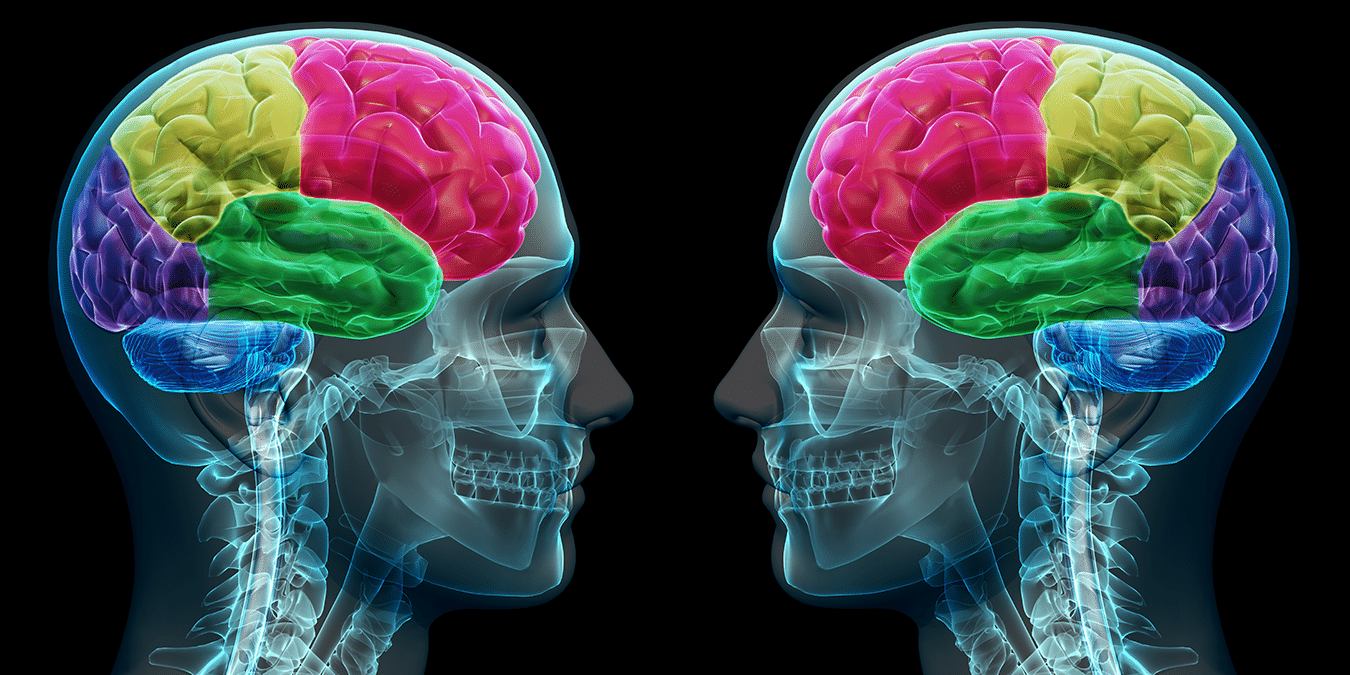
Adam’s fate was to outrun his own nature: to be dragged by his big brain, by his snowballing technology, into regions his body had never known. Like Eve, he was the victim of an overgrown head. Of course, our big brain is our nature, too. But in eating the forbidden fruit, though we failed to become gods, we ceased to be pure animals. At that point, Eden could no longer be our home — for whatever place we made our home ceased to be Eden.
Evan Eisenberg
Last time, we looked at the emergence of the fully modern human brain around 60,000 years ago, and the subsequent population explosion enabled by this great leap forward. The result was the rise of civilizations. But civilization brings one big problem: it is unnatural. This problem is manifested in two main ways. First, the unnatural pace of change driven by humans starts to buckle the surrounding ecologies wherever we spread as a species. Secondly, civilizations themselves are foreign to the much older social primate part of the brain. In place of the tribe — the default grouping for human ancestors for millions of years — powerful civilizations substitute in different basic social formats, units that were both too small (the nuclear family and extended family) and too large (the empire, the faith tradition, the nation). The older primate and early homo brains had evolved to thrive in intimate social groups ranging from 30-150 individuals, so the new micro- and macro-social formats spun out by civilizations begin to create human dissatisfaction and angst, as the ancient tribal longings go unfulfilled.
So in the widest narrative scope of the human story, what we have is a species that has burst the boundaries of its own origins, both physically and psychologically, exercising unprecedented biological and ecological power, to the point where we could be considered an unnatural entity.
As I see it, there really two main ways of responding to this existential situation of the human species.
The first response we can call “religious,” as religion is both the earliest and still most widespread reaction to the crises churned out by civilization. The archetype here is the Eden story. God creates people and gives them an idyllic, harmonious home in which to while away their days. But we fuck it all up and are cast into the misery of agriculture, which is inextricably tied to toil, suffering, and death. In the eventual theological interpretation of the Eden myth (which includes the authors of Genesis itself), it is the disobedience of Adam and Eve that gets all the attention. But this story is archaic, and what it actually tells is a pre-theological tale of the transition from tribal, hunter-forager nomadism to settled agriculture, a wrenching and painful change that still lingered in people’s minds, as the crummy conditions of sedentary civilizations — famine, slavery, poverty, toil, disease, etc. — were becoming undeniable.
As Daniel Quinn reminds us, the forbidden fruit came from a specific source, the tree of the knowledge of good and evil, and not just from any old vegetative place. So in tasting that particular fruit, the disobedience itself was not the real issue. After all, an omnipotent, omniscient, and all-loving God could have certainly just created humans who could resist temptation, or he could have just NOT made that certain tree at all (theological glosses on the need for free will are not convincing, as they just push the discussion somewhere else — again, why could an omnipotent God not create a completely obedient creature with free will?).
The tree itself provides the clue as to what was going here. As Quinn describes it, in changing over to agriculture, humans had put themselves in a position of deciding what lives and what dies, and thus what is ‘good’ versus what get tallied as ‘evil.’ The problem is not the hubris of Adam and Eve, or even the usurping of God’s role. Rather, the issue was with the very real, bad material outcomes of agricultural civilization itself — it just doesn’t work that well, compared to older tribal ways of life. Eating from that tree, a tree that represents the power over life and death, had resulted in miserable and usually shorter lives, boom and bust cycles of abundance and dearth, social inequality, instability, and ecological degradation.
All of the great world religions emerge to address this crisis of agricultural civilizations, culminating in what religious scholars call the Axial Age (roughly 800-200 BCE), where universal faith traditions emerged all over the world. For our purposes, we can take a step back, to view the religious approach in general as one grand wing in how humans understand the profoundly unnatural condition that is the product of civilization. This religious response is, roughly, “Yes, humanity’s estrangement from the rest of the world and from God is a problem, and we must heal that rift by recreating the tribe, but in a spiritual sense, for a spiritual, eternal realm.” No matter how green any particular faith tradition might be, the religious stance is ultimately defined by an unnatural, eternal referent. In the end, the religious homeland is not natural, and all ecological crises are ultimately not as important as spiritual everlasting life in communion with the divine. But nonetheless, the stance itself is the important thing. We could say that religion is finally about theodicy, recognizing that there is some type of evil that results from separation, a division that must be healed, to change that evil to good.
So the first macro-response to humanity’s unnatural condition is one of acknowledging the problem as a problem. Even though the solutions provided by religions are ultimately unnatural themselves, there is at least a recognition, carrying over from an archaic sense of discomfort and dissatisfaction with civilization, that no, this is not the way things should be. We need to fix the rift. Even if religious people describe the break as one between humanity and God, what is really being expressed is the rupture between people and nature, between the needs of the human brain and the dehumanizing and oppressive products of that same brain.
The second grand way of responding to the unnatural condition of the human species is much newer and simpler. While birthed in some classical branches of ancient philosophy, and then expanding through strands of science, politics, and economics, the general feel of this approach is straightforward: “So we’re unnatural? That’s awesome, because nature sucks! We can do much better with our powerful technologies and cultural systems, so fuck the earth and its dirty, grimy limitations! We’re gonna live on the moon, then Mars, then in some eternal singularity of AI-human hybrid consciousness — a new Eden. Unnatural? Who cares? Just get out the way and watch humanity triumph over our homely origins.”
Now of course, this is a caricature, but it roughly captures the main alternative to the religious point of view. To put it another way, religions emphasize theodicy: where does evil come from and how to we explain and respond to it? And the other group, let’s call them Enthusiastic Unnaturals, sees the bad stuff in the world as just a temporary roadblock to be overcome with our genius, and not as some existential fault with humanity in general.
The problem with Enthusiastic Unnaturalism is captured in the Frankenstein story. Whenever humans believe that they can play God and burst the limitations of flesh, blood, and death, the outcome is not so good. The results of shrugging off our natural essence are often destructive, grotesque, and monstrous. Rejecting the limits of nature easily elides into disdain for the physical bodies of all those unfortunate, pathetic people who get left behind by the grand projects of those who would be immortal lords over the cosmos, whether that’s ancient priests and emperors, or modern plutocrats and AI robber barons.
Enthusiastic Unnaturalism is doomed to fail, because the needs and wants of human beings are all overwhelmingly natural, shaped by millions of years of evolution. Deep down, most people don’t have any desire to slip the bonds of earth to travel to the stars or into an AI singularity. We want the things of the earth, simple experiences of flesh and blood. We want good food, good sex, supportive intimate relationships, social intrigue (we spend two thirds of our talking time in basic gossip), some beautiful surroundings, some nice things, and other earthly satisfactions and delights. Leaving the natural world behind is usually a project of sociopaths and megalomaniacs, not the rank and file.
Let’s recap: the emergence of the human brain allows for profoundly unnatural civilizations to emerge, which are deeply unsatisfying to the much older, primate-derived needs and desires of human beings. In response, religions seek to heal that rift by positing a supernatural realm where harmony with the divine will be restored. But a more recent, competing stance develops, one that fully embraces the unnaturalness of people and their powerful civilizations, and envisions an even more unnatural world, where people traverse the stars and possibly merge with super-intelligent machines.
In this context, we can see people’s dissatisfaction with our current state of affairs in a different light. Global consumer-industrial civilization carries the original unnatural character of archaic civilizations to an apocalyptic place. Infinite growth on a finite planet, and the economic power of plutocracy, which tosses all traditional human relations and relationships onto the bonfires of free markets and profit, are becoming less and less defensible, as entire countries and societies are sacrificed in the name of “progress.”
In response, people are retreating to the older consolations of religion and ethno-nationalism, in a desperate attempt to recover something more earthly and familiar. But the fundamental problem remains: imagined and/or parochial tribalism cannot truly heal the rift between humanity and nature, and can at best provide a world-denying refuge for temporary relief, while the rest of the planet sinks into cascading collapse.
In other words, we’re a species at war with itself, with its own dueling essences. Our older brains were at home in nature, and our newer brains have tossed that aside for the cold comforts of power and reproductive “success.” But that very success is actually our undoing, and we are busy translating that demographic boom as a species into the macro-destruction of all the natural support systems on Earth,
As I see it, the only solution to this existential impasse is to update the religious stance to a purely natural application. When presented with the choice between, A) Our split with the natural world is a problem, and needs to be fixed, or B) That split is a good thing, and we should embrace being unnatural — I come down firmly in the first camp. But instead of a purely religious answer to the rift, where competing doctrinal tribes strive for a supernatural, eternal harmony in another realm, we need to heal the human/nature gulf with actual, new tribal formats here on earth — concrete, embodied, natural groups that can feed our soul-thirst for real human communities. Only these new tribal formats can undertake the “religious” mission in a non-religious way, by devoting themselves to healing the planet and draining the energy out of our unsustainable civilizational system from below.
The grand projects of Enthusiastic Unnaturalism must be abandoned. Space travel, AI, techno-abundance, the Singularity — all those pipe-dreams of megalomaniacs and inch-deep plutocrats must be scrapped, as the path away from natural grounding and natural limits leads only to the monstrous, the grotesque, and eventually, death.

