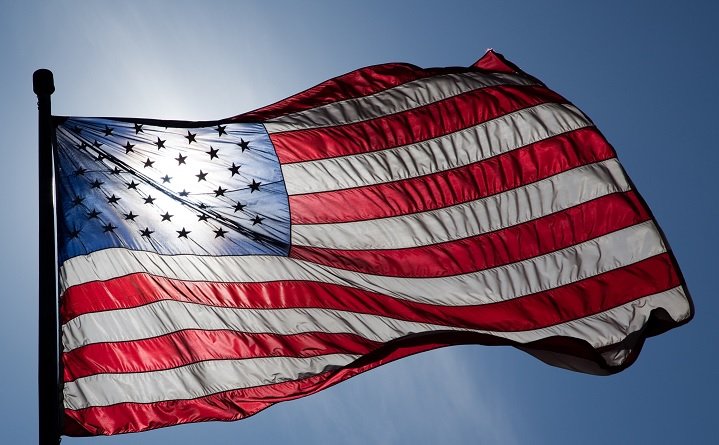
What joins the Americans one to another is not a common ancestry, language or race, but a shared work of the imagination that looks forward to the making of a future, not backward to the insignia of the past.
Lewis Lapham
I am not an advocate for frequent changes in laws and Constitutions. But laws and institutions must go hand in hand with the progress of the human mind. As that becomes more developed, more enlightened, as new discoveries are made, new truths discovered and manners and opinions change, with the change of circumstances, institutions must advance also to keep pace with the times. We might as well require a man to wear still the coat which fitted him when a boy as civilized society to remain ever under the regimen of their barbarous ancestors.
Thomas Jefferson
Despite all the horrible things that Donald Trump has done, there might be some semblance of a silver lining in his otherwise disastrous tenure. That is, he has kicked the door down for radically different ways of seeing our country and its future.
For a long time, the two main political parties have been settled into comfortable opposition ideologies. Republicans were the boring, older, pro-business, responsible “father-types, while Democrats were the younger, more passionate, more ideationally experimental, mommy-squad. (And yes, I know this is oversimplified and seemingly sexist or whatever, but just look at the gender splits in recent elections to see the still-relevant artifact)
These two sides of the political spectrum had different visions of the future, but they were not universes apart. Republicans wanted most of the things that they still want: tax cuts, deregulation, free trade, and all that. But they were generally, well, conservative, in a meaningful sense, not prone to breathless apocalyptic warnings about social upheaval and cultural catastrophe. And Dems, while attacking the CEO and country club set, still viewed civil rights, women’s rights, LGBTQ+ rights, and other social justice crusades inside a recognizable economic format. Liberals just wanted MORE and DIFFERENT people to get the same bite at the opportunity apple as white dudes had been getting for centuries.
So the two sides roughly agreed that the system was fundamentally sound, and just needed the right kind of adjustments to achieve a standard list of economic goals: full employment, equal opportunity, low inflation, social mobility, economic growth, rising wages, profits for businesses, etc. The parties just disagreed about the right mix of these elements to optimize the system. But that system itself, was, at bottom, valid if not yet virtuous.
As we have covered many times previously, this comfortable duopoly started to come apart in the mid-90s, when Clintonian triangulation created the Republican need to find a different way of distinguishing themselves from the Dems, who were now also chasing the big money donors previously reserved for the GOP. The result? Political and cultural polarization, and the energetic demonization of liberals, a strategy birthed by Rupert Murdoch, Rush Limbaugh, and Newt Gingrich. With American politics now reinterpreted as a cosmic, theological battleground between the forces of good vs. the demonic liberal hordes, the boring old semi-consensus on “The System” being valid was blasted apart. And of course, the Polarization Industrial Complex emerged to codify and commodify this cosmic war, building an artificial fight cage for regular people to rage at each other instead of focusing on the plutocracy that was gathering momentum and power across our entire society.
Enter Donald Trump, the perfect and clueless culmination of the project started by the Odious Three in the 90s. Trump himself is not smart enough to be in on the polarization-as-distraction strategem, so at times, he can actually make plutocrat collars a bit tight and sweaty (as with tariffs, which generally run against plutocrats’ love of free trade; but the fat cats quickly realized that they could just forward those fees onto us normies, so all was good). But that lack of self-awareness and understanding of the big picture make Trump even more perfect as a plutocrat fluffer. He comes off as that most sacred of political virtues: genuine (no matter what the ensuing modifiers — genuinely patriotic or genuinely psychotic?)
Of course, the danger of handing the Unitary Executive keys over to a bonafide malignant and tyrannical narcissist who hasn’t cracked a book since the last batch of Trump Bibles needed autographing (and before that, not since midtown Manhattan Barnes & Noble book signings for “Art of the Deal”) is that he will eventually go off script and do a whole bunch of crazy shit that really could damage the cash flow to the wealthy. Lunacy is sometimes useful, but notoriously difficulty to tame.
That’s why, kind of all at once but also in excruciating slow motion since the 90s, we look up and there are now a whole bunch of radical and crazy ways of seeing the American future, and they’re all getting substantial airtime now, instead of just languishing in dark corners of conspiracy dens. Somewhat due to Trump’s megalomania, but more so because of his role as a holy vehicle of vengeance for a long list of bundled grievance groups, we now have a full slate of attention-getting, novel ways of imagining our country. White supremacists are out of the shadows, and ICE is helping to fuel the grand fantasy of an all-white country. The straight-up theocrats, or Christian Nationalists, if you prefer, are out of the woodwork, getting all kinds political victories and other means of support for a religious takeover of the state. The AI and crypto-utopians are also running amok, chasing the Singularity, or a tax-free, borderless society, or colonies in space, utilizing their gaudy trillions to buy up land, media, and an army of government toadies.
In essence, because Trump is a grand collector of all species of anti-liberal hatred, each of those components of his coalition gets to trot out its own version of a New America, a holy nation freed from the tyranny of horrible things like women working, people speaking Spanish, a trans kid feeling good about themselves, or (gulp) not believing in God.
Now granted, all these Trump-catalyzed dreams of the American future are horrible, dangerous, and fundamentally UN-American. But on the quasi-bright side, this ideological free-for-all has dislodged tens of millions of people from the plutocratic status quo, at least in theory. In this state of affairs, it’s hard to imagine (though many establishment Dems desperately wish it to be so) MAGA people giving up their radical dreams of the future, only to suddenly decide, “Yeah, let’s vote blue again. Those guys have the sensible, subdued, and practical path mapped out right. Vive la commonsense!”
That’s just not gonna happen. Trumpism has ushered in a taste for the radical, and I can’t see the country just settling back into the old, boring duopoly of different flavors of establishment boosterism. That pre-Clintonian soft consensus is gone, fundamentally undone by the excesses of the neoliberal plutocracy itself. There’s no way back. The future is divergent, not convergent.
Libs and Dems need to pounce on this thirst for business-NOT-as-usual, the growing and radical realization by the populace that the system needs to be undone and completely reimagined. If they can’t rise to this public mood for status-quo smashing, then the opportunity could be lost forever, perhaps along with American itself.
Next Time — Part 2 — What kind of realistic options are out there for what kind of country the US should become?


One thought on “What Kind of Country Do We Want to Be? (Part 1)”